
Removing persistent kitchen grease often requires stronger cleaning formulations and specific techniques tailored to the environment where the grease accumulates. In commercial kitchens, grease may build up rapidly on hoods, fryers, and exhaust ducts, while in home kitchens it typically forms on stovetops, backsplashes, and range hoods. Heavy-duty cleaning formulas are designed to break down oil and carbonaceous residues through chemical action, emulsification, or enzymatic breakdown. The selection of a particular formulation typically depends on the substrate being cleaned, the thickness and composition of the grease, and practical considerations such as ventilation and available equipment.
Formulations intended for intensive degreasing can vary widely in pH, solvent content, and surfactant type, and these properties influence how they perform on different materials. Users may encounter high-alkaline products, solvent-based solvents, citrus-derived solvents, or biologically active cleaners; each category can act differently on organic soils and residues. Application methods and dilution instructions often differ between commercial and domestic products, and safe handling measures such as personal protective equipment and proper rinsing are commonly advised. Understanding these distinctions helps inform choices that match cleaning needs without making absolute claims about performance.
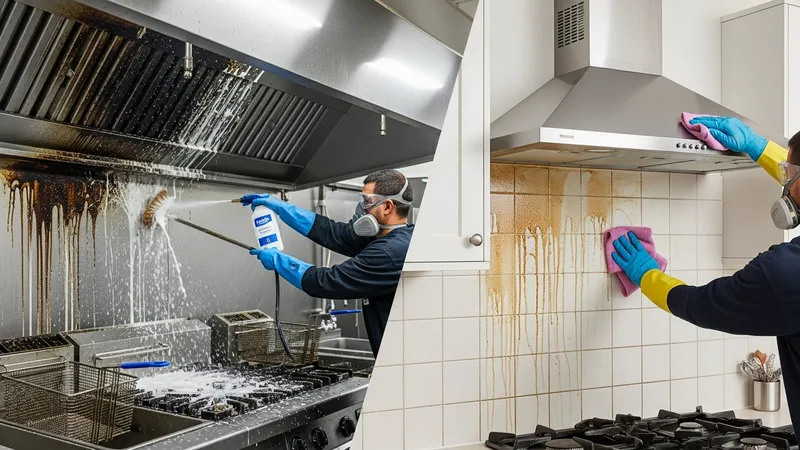
Alkaline degreasers typically contain strong builders or caustic agents that may neutralize fats and convert them into soluble forms; they can be effective for baking-on and carbonized deposits but can also affect certain finishes and painted surfaces. Solvent-based products often remove polymerized oils more rapidly by solvating them, which can reduce manual scrubbing but may require good ventilation and careful disposal. Enzymatic cleaners may work more slowly and can be used where repeated, low-impact cleaning is acceptable; they may be less aggressive toward metal finishes and coatings. Each type may include surfactants or chelating agents to assist emulsification and rinsing.
Concentration and dilution are practical considerations: commercial facilities commonly use concentrated stock solutions with adjustable dilution controls, while household products are often sold at ready-to-use concentrations or with user-friendly dilution guidance. Stronger concentrations may shorten dwell time but can increase risks to surfaces and to user safety if not handled properly. Material compatibility testing on an inconspicuous area may often be recommended before treating whole surfaces, and following manufacturer instructions for dilution and contact time typically reduces the chance of unintended damage.
Safety and environmental aspects often influence the choice of heavy-duty formulas. High-pH and solvent-containing cleaners can require gloves, eye protection, and adequate ventilation; neutralizing or rinsing steps may be needed to prevent residues that could affect food-contact surfaces. Some formulations are designed to meet more stringent environmental or workplace standards and may reduce volatile organic compound (VOC) emissions or use readily biodegradable components. Wastewater management and disposal should typically follow local regulations to avoid contaminant release.
Operational context and cleaning schedules often determine which formulas and methods are practical. Commercial kitchens may integrate mechanical cleaning, scheduled degreasing of hoods and filters, and professional deep-clean services as part of routine maintenance, while residential users often balance ease of use and storage considerations. Training for staff or household members on safe handling and correct application may reduce incidence of improper use. The next sections examine practical components and considerations in more detail.
Chemical profiles for heavy-duty degreasers typically fall into categories such as alkaline, solvent, and enzymatic blends, each with characteristic active ingredients and modes of action. Alkaline products may contain builders like sodium or potassium hydroxide, carbonate salts, and strong surfactants that saponify fats and lift them into solution. Solvent blends may use glycol ethers, petroleum distillates, or citrus-derived terpenes that dissolve oils; these can reduce the need for mechanical agitation but may produce higher VOCs. Enzymatic cleaners utilize proteases, lipases, or amylases to break down organic components over time and may be formulated to work at milder pH levels for safer handling.
Concentration, buffering, and surfactant type influence performance and material interaction. For example, nonionic surfactants often help emulsify oils without promoting corrosion, while strong alkalinity speeds emulsification and saponification but may attack certain metals, coatings, or plastics if overused. Some formulations include corrosion inhibitors or chelators to limit metal attack. Manufacturers may provide technical data sheets that describe active ingredients, recommended dilutions, and safety precautions; consulting these sheets can clarify expected behavior in specific cleaning scenarios.
Typical usage patterns may differ by environment: in higher-throughput commercial settings, concentrated alkaline solutions may be diluted and applied by pressure sprayers or foaming systems to achieve rapid removal and to reduce labor time. In domestic settings, lower-concentration ready-to-use sprays or wipes may be preferred for convenience and lower handling risk. The choice of formulation can also respond to ventilation availability, worker protection measures, and wastewater treatment capacity, which may limit use of certain solvent-rich products in some contexts.
When selecting among formulation types, consider factors such as dwell time, required mechanical action, and the need for rinse or neutralization steps. Longer dwell times with moderate-strength cleaners can sometimes replace harsher chemistry combined with vigorous scraping. Conversely, severely baked-on grease may often require stronger solvents or alkaline chemistry plus mechanical agitation. Descriptions of formulation behavior are typically available in product technical literature and should be reviewed to match chemistry to cleaning needs.
Different surfaces commonly found in kitchens respond differently to heavy-duty cleaners. Stainless steel generally tolerates many alkaline and solvent cleaners but can be susceptible to surface etching if exposed to strong caustics at high temperature. Aluminum and painted or powder-coated metals may discolor or lose finish with strong alkaline or solvent exposure. Natural stone countertops such as granite or marble typically require neutral pH cleaners to avoid etching, while plastics and laminate surfaces may soften or craze when exposed to aggressive solvents. Understanding these tendencies helps select chemistry and dilution that may minimize material damage.
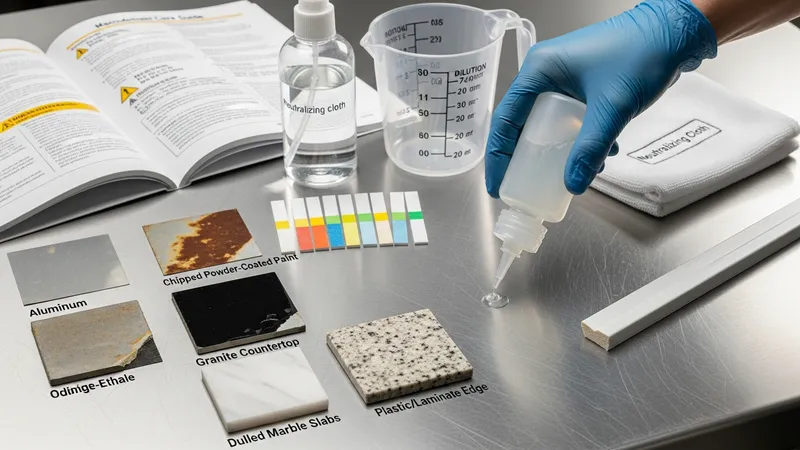
Testing on an inconspicuous area is often advised before full-scale application; a small trial can reveal color change, finish alteration, or adhesive weakening. Manufacturers of commercial kitchen equipment and countertop materials typically provide care guidance that may list incompatible chemicals and recommend safe alternatives. For food-contact surfaces, rinsing with potable water after degreasing and using products rated for incidental food contact are common practices to reduce residue concerns, with neutralization steps included where necessary.
Application temperature and mechanical action can alter how a cleaner interacts with a surface. Elevated temperatures often increase chemical activity and can accelerate cleaning, but heat combined with strong alkalis may intensify corrosive effects. Mechanical scrubbing or abrasion can remove grease more quickly but may also strip protective factory finishes, making selection of less abrasive pads or brushes important. Using mild agitation with an appropriate chemical may often be preferable to aggressive scouring that can cause permanent surface change.
Rinse and post-treatment care are practical considerations tied to material compatibility. For substrates sensitive to alkalis or solvents, thorough rinsing and neutralizing with a mild acidic rinse or manufacturer-recommended neutralizer may often be part of the protocol. Periodic conditioning or resealing of porous stone or specialized finishes may reduce future penetration of oils, which can in turn influence how often heavy-duty treatments are required.
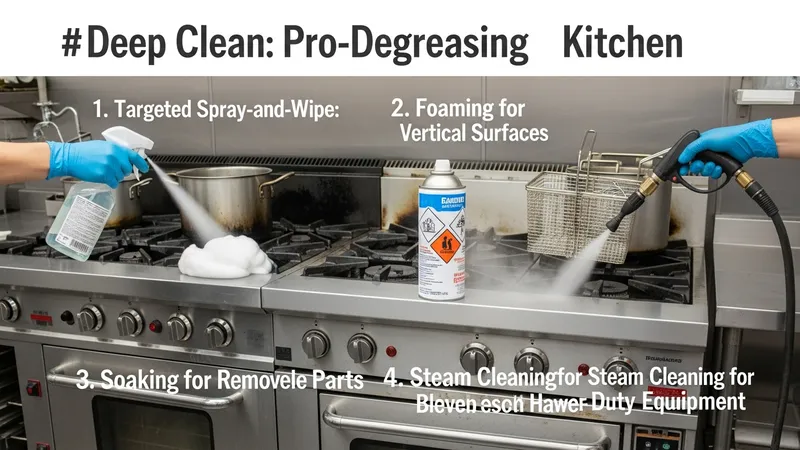
Application methods for heavy-duty degreasing vary with the formulation and scale of the job. Common approaches include spray-and-wipe with appropriate dwell time, foaming systems that extend contact on vertical surfaces, soak-and-scrub for removable components, steam cleaning for heat-assisted removal, and pressure washing for exterior or industrial equipment. Mechanical agitation—using brushes, pads, or pressure—can aid chemical action, but care is required to prevent surface damage. Selection of the method typically aligns with the type of grease, surface sensitivity, and access to equipment such as foaming rigs or steam cleaners.
Personal protective equipment and ventilation considerations often accompany the use of heavy-duty formulas. Gloves that resist caustic or solvent exposure, eye protection, and in some cases respiratory protection may be advised depending on product safety data. Adequate ventilation reduces inhalation exposure to volatile components. Labels and safety data sheets commonly outline required precautions and first-aid measures; following those guidance elements can reduce risk during handling and application.
Rinsing, neutralization, and wastewater handling are part of safe application practice. Some products require an explicit neutralization step after cleaning to restore a safe surface pH for food contact; others are formulated to be low-residue when rinsed. Disposal of rinse water or spent cleaning solutions should typically align with local regulations to avoid introducing high-BOD or solvent-laden effluent into municipal systems. In certain settings, using designated waste collection or treatment processes for cleaning effluents may be necessary to comply with environmental rules.
Storage, labeling, and spill response complete the safety picture. Concentrated cleaners should be stored in labeled, compatible containers away from children and untrained personnel; incompatible chemicals should be segregated to prevent hazardous reactions. Spill kits appropriate for caustic or solvent-containing products, along with documented response procedures, can limit exposure and environmental impact. Training that emphasizes product-specific safety data and routine operational checks may often reduce incidents during heavy-duty cleaning tasks.
Maintenance patterns and cleaning frequency often differ between commercial and residential settings due to volume of use and regulatory expectations. Commercial kitchens may follow scheduled cleaning intervals—daily wipe-downs, weekly hood and filter degreasing, and periodic professional deep cleans—aligned with food safety management plans. Residential kitchens commonly use less frequent heavy-duty degreasing, addressing visible buildup or odor and performing seasonal deep cleaning. Scaling cleaning efforts to match use patterns can often extend equipment life and reduce the need for more aggressive chemistry.
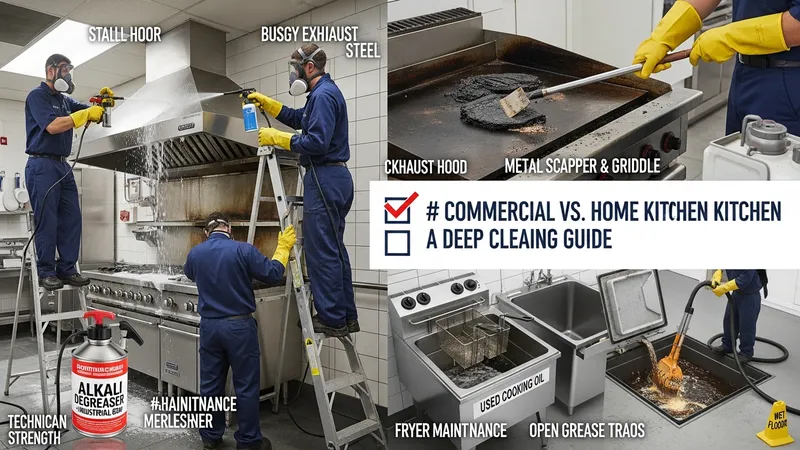
Equipment-specific maintenance affects cleaning choices and intervals. Fryers, griddles, ovens, and exhaust hoods accumulate different kinds of residues that may require tailored formulas and techniques; for instance, combustion byproducts and carbonized deposits on griddles may require stronger alkaline or solvent action combined with manual scraping. Filters and grease traps in both settings benefit from routine service to prevent saturation and carryover, and scheduled replacement or cleaning of filters can often reduce the intensity of chemical interventions needed.
Training and documentation are operational elements that can improve consistency and safety. Commercial operations frequently maintain cleaning logs, use manufacturer- or supplier-provided technical data sheets, and document procedures within broader sanitation plans. In residential contexts, maintaining simple instructions on dilution ratios, safe handling, and material compatibility can support safer use. Both contexts may find value in periodic review of procedures to adapt to changes in equipment, products, or regulatory guidance.
Long-term maintenance planning includes balancing cleaning chemistry, mechanical care, and inspection routines. Regularly addressing minor grease accumulation may often prevent the development of thick, polymerized deposits that require more aggressive treatments. Choosing cleaning intervals and methods that align with equipment sensitivity, available ventilation, and waste-handling capacity can help manage costs and safety considerations over time. A planned approach to maintenance typically supports predictable cleaning outcomes without relying on extreme or one-off interventions.